Backgammon Tournaments and Competitive Play
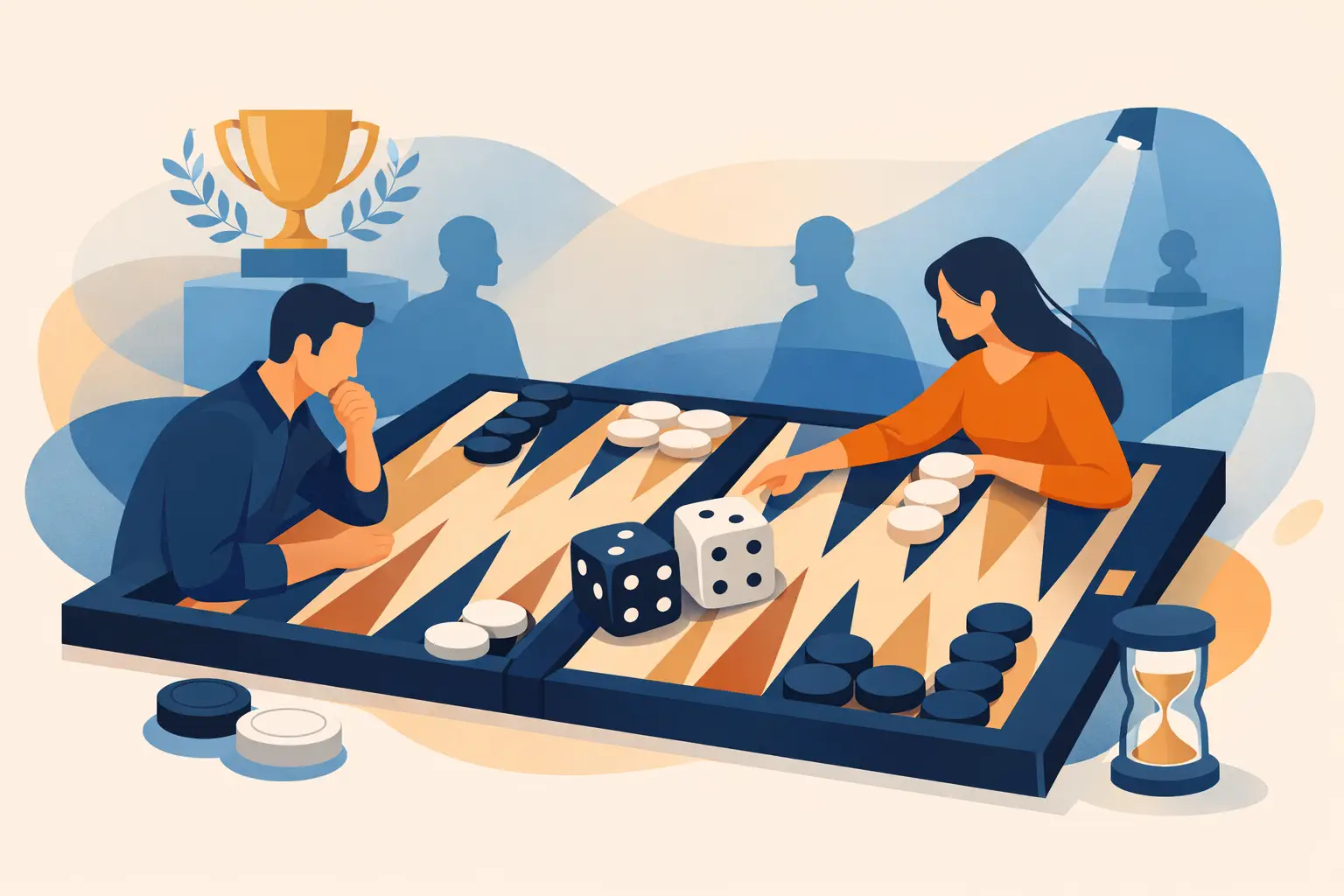
A tournament changes the meaning of every decision. In a casual game, a risky blitz that fails may simply create a good story. In backgammon tournaments, that same decision can cost match equity, drain your clock, or end a run you spent weeks preparing for. The dice still matter, but consistent results come from reading the score, managing pressure, and making the best available choice before time runs out.
What Makes Backgammon Tournaments Different?
Tournament backgammon is not just a series of ordinary games with a leaderboard attached. The format gives every point a different value. A checker play that is correct in a money game may be wrong in a match, especially when one player is close to the target score.
The biggest shift is match equity. If you are leading 6-1 in a race to 7, you do not need to chase every volatile position. Your opponent needs a comeback, which changes the value of the doubling cube, gammons, and even small tactical risks. When you are behind, the opposite is often true: passive, low-variance play may protect a position, but it may not give you enough chances to recover.
That is why strong tournament players do not ask only, "What is the best move?" They ask, "What is the best move at this score, with this cube, against this opponent, in this format?"
Common tournament formats
Most events use one of several familiar structures. Single elimination is fast and intense: lose once, and your tournament is over. Double elimination gives players a second route after an early loss, rewarding resilience but requiring more rounds. Swiss-style events pair players with similar records over a set number of rounds, so one bad match does not immediately end the day.
Online tournaments may also use scheduled brackets, sit-and-go events that begin once enough players join, or multi-stage leaderboards. Each format rewards a slightly different mindset. A short knockout event calls for immediate focus. A longer ladder or Swiss event rewards consistency, emotional control, and the ability to reset after a tough defeat.
Learn the Match Score Before You Touch the Cube
The doubling cube is where tournament experience becomes visible. Newer players often treat it as an all-purpose aggression button. Experienced players see it as a score-sensitive tool that changes the entire position.
At an even score early in a match, cube decisions can resemble money-game logic. Both players have room to maneuver, and gaining a point has a relatively straightforward value. Near the end of a match, the score can create unusual situations. A player who needs one point may be happy to take a cube that would be too dangerous at another score. A player who is one point away from winning may prefer a line that minimizes gammon risk, even if it gives up a little raw winning chance.
This is often called match play. You do not need to memorize every formula before entering an event, but you should understand the core principle: the score changes your priorities.
A few practical habits make a major difference. Before each game, say the score to yourself and identify who is closer to winning. When a cube decision appears, pause long enough to consider whether gammons help or hurt you. If you are trailing badly, look for legitimate opportunities to create volatility. If you are ahead, do not confuse aggression with strength.
Build a Tournament Game Plan
Preparation does not mean trying to predict every roll. It means reducing the number of decisions you make emotionally.
Start with the parts of your game that recur constantly: opening moves, early replies, basic bear-off technique, prime versus prime positions, and common hitting decisions. These are the spots where familiarity saves time and protects your clock. Daily puzzles are especially useful when they force you to explain why one move works rather than simply recognizing a pattern.
Then work on your weaker phase of the game. Some players lose equity by playing too cautiously in contact positions. Others overplay holding games when they should accept a clean race. Review completed matches with a specific question in mind, such as whether you missed cube actions or gave up too many gammons. Broad review is useful, but targeted review creates faster improvement.
It also helps to set a realistic goal for the event. "Win the tournament" is motivating but not fully under your control. "Stay present on every cube decision," "avoid clock trouble," or "review three difficult positions afterward" gives you something measurable, even if the bracket does not go your way.
Clock Discipline Is a Competitive Skill
A tournament clock does not only test speed. It tests prioritization. Spending two minutes on a routine bear-off may leave you with seconds for a difficult cube decision later. Moving instantly in a complex position can be equally costly.
Use your time where it creates the most value. Routine plays deserve routine time. Slow down for positions involving a potential double, a major tactical shot, a gammon decision, or a choice between racing and maintaining contact. If the board is complicated, first identify the game plan. Are you trying to escape a back checker, contain an opponent, build a prime, or simply clear points safely? A clear objective makes candidate moves easier to compare.
Do not let a bad roll speed you up. Players often rush after getting hit or missing a key number because they want to get the turn over with. That is exactly when errors multiply. Take a breath, read the board from both sides, and make the best play available.
Online play adds one more practical rule: protect your connection and your device. Charge your phone, use reliable internet when possible, and know where reconnection support applies. Tournament concentration is hard enough without avoidable technical distractions.
Fair Dice Are Part of a Serious Competition
Backgammon has always included variance. A player can make the right decision and still lose a match. That reality is frustrating at times, but it is also what makes strategic judgment meaningful across many games and many events.
What players should never have to wonder about is whether the dice system itself is trustworthy. Competitive online backgammon needs transparent safeguards, particularly when a close match turns on a sequence of dramatic rolls. A provably fair approach lets completed-match rolls be re-derived from published records, giving players a way to verify that results were not altered behind the scenes.
That distinction matters. Fairness does not mean the dice will feel kind. It means both players receive the same impartial randomness, and the record can support that claim. On Online Backgammon, this verification framework sits alongside real-time matches and rankings, so competitors can focus their energy where it belongs: on the board.
Handle Momentum Without Chasing It
Tournament matches create emotional swings. You may enter the final game after a perfect prime gets cracked by a joker. You may win a match despite playing a position poorly. Neither result should dictate your next decision.
After each game, reset with a short routine. Check the score. Notice the cube position. Let the previous game go. There is no value in trying to "win back" a bad roll through an unsound attack, and there is no guarantee that a lucky sequence will continue.
This is especially important in elimination play. The pressure to avoid a loss can make players timid, while the pressure to finish an opponent can make them reckless. Good tournament backgammon stays responsive. Take risks when the score and position justify them, not because your last game felt unfair or your opponent looks vulnerable.
Turn Every Event Into Better Play
The tournament is not over when the final checker comes off. Write down one or two positions that made you hesitate. Were you unsure whether to double? Did you leave a shot because you miscounted a race? Did the clock force a guess? Those moments are more valuable than a vague feeling that you played well or badly.
Over time, this process builds a sharper competitive instinct. You begin to recognize when a lead needs protection, when a back game is real rather than wishful thinking, and when an opponent's cube action reveals pressure. Ratings and results matter, but they are evidence of progress, not the whole purpose of playing.
Enter the next event ready to show your strategy. Respect the score, trust a fair game, use your time well, and let each difficult position teach you something worth bringing to the next board.