Daily Backgammon Puzzles Online Build Better Plays
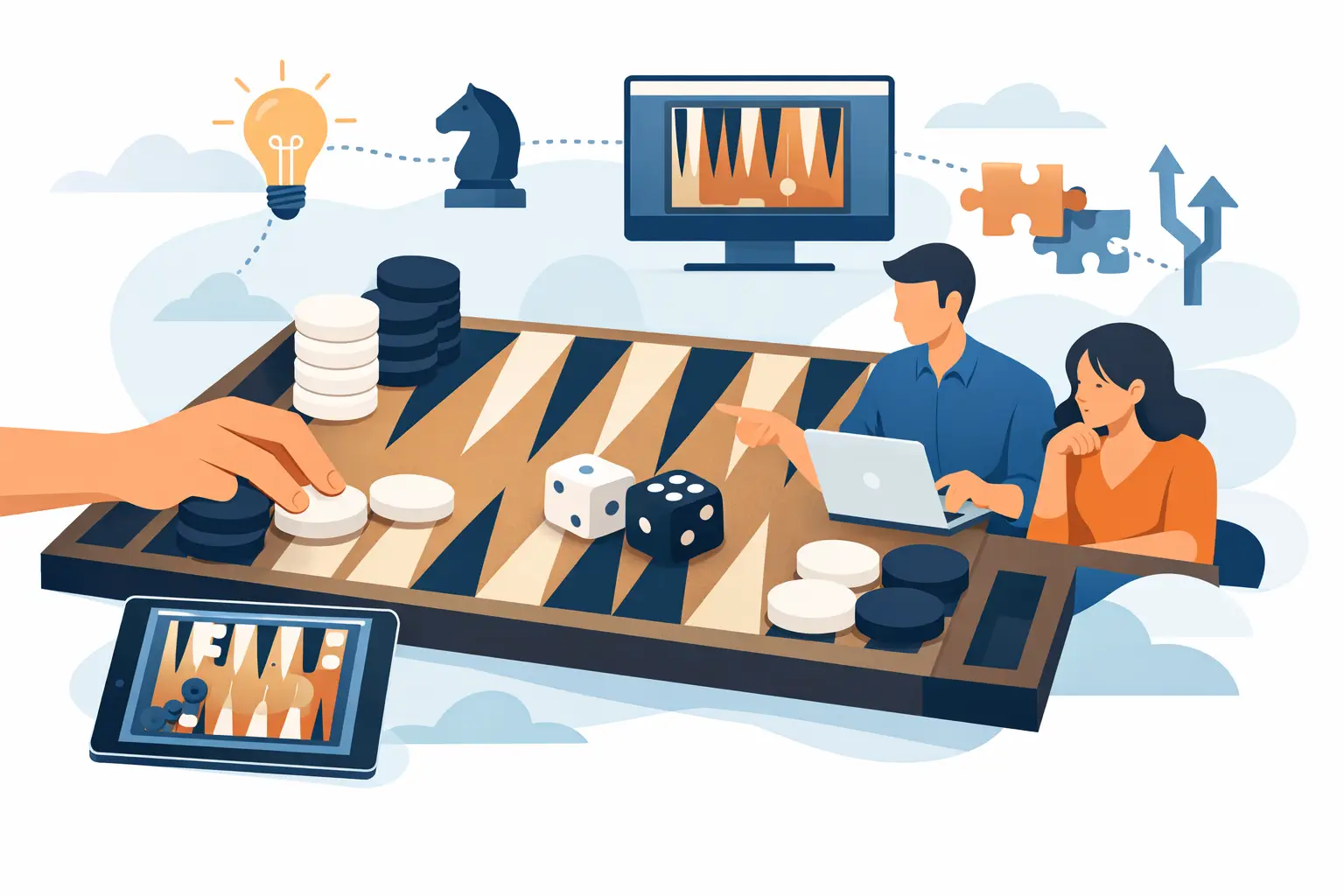
A missed hit, a loose checker, one point left open too early - these are the decisions that change a match. Daily backgammon puzzles online put those turning points in front of you without requiring an hour for a full session. You see the board, weigh the risk, choose your play, and learn whether your instinct holds up.
That is more than a quick distraction between matches. Strong players build their edge by recognizing familiar positions before the clock, the dice, and an opponent's pressure make every choice feel urgent. A daily puzzle gives you a focused repetition: not just what move works, but why it works.
Why Daily Backgammon Puzzles Online Matter
Backgammon is a game of incomplete certainty. You can calculate shots, count builders, and estimate your opponent's return chances, but you cannot control the next roll. The skill is making the best decision with the information on the board right now.
Puzzles isolate that skill. Instead of thinking about every earlier mistake in a match, you face a single position with a clear question. Should you hit or make a point? Run a checker or hold an anchor? Slot aggressively or play quietly? Those choices are where practical improvement happens.
The value comes from consistency. One puzzle will not transform your game, and a puzzle streak is not the same as a match rating. But a short daily habit develops pattern recognition. Over time, you start spotting the same tactical signals during real games: a blot that is worth attacking, a prime that is about to close, or a race that looks safe but is not.
Online puzzles also remove the usual friction. You can work through a position on your phone while waiting for coffee, continue on a tablet at home, or take on a harder problem in a browser before a ranked session. The board is ready when you are, which makes deliberate practice much easier to sustain.
What a Good Puzzle Teaches You
A useful puzzle should not reward a flashy move just because it looks aggressive. It should make you compare real alternatives and understand the trade-off behind the best one. The best move can be quiet, defensive, or even uncomfortable when it preserves winning chances better than the obvious play.
Tactical awareness under pressure
Some positions are immediate. You have a direct shot, an opponent trapped behind a prime, or a chance to make a key inner-board point. Tactical puzzles train you to slow down long enough to inspect every legal use of the dice.
Start by locating blots, direct shots, and duplicated numbers. Then ask what changes after each candidate play. A hit may send an opponent to the bar, but does it leave you exposed to a stronger return shot? Making a point may look safe, but does it give up the last chance to contain a runner? The answer depends on the position, not on a fixed rule such as "always hit."
Better board reading
Newer players often see individual checkers. Better players see structure: builders, gaps, anchors, timing, primes, and the balance between offense and defense. A puzzle is an efficient way to practice reading that structure.
Before moving, take a five-second inventory. Who has the stronger home board? Who is ahead in the race? Is either player trapped? Which points matter most over the next few rolls? This simple pause keeps you from choosing a move based only on the dice in front of you.
Risk management, not perfection
Backgammon strategy is not about avoiding every shot. Often, leaving a blot is right because the alternative gives your opponent too much time, destroys your own structure, or fails to create enough winning chances.
Daily problems teach the difference between a calculated risk and a careless one. If you leave a shot, consider its number of hits, the damage if you are hit, and what happens if your opponent misses. A blot facing six numbers is different from one facing two. A checker hit in an open board is different from one hit against a four-point board. Those details decide whether courage is justified.
A Three-Minute Routine That Transfers to Matches
The fastest way to waste a puzzle is to move instantly and wait for a verdict. Treat each one like a compact match decision instead. You do not need a spreadsheet or a long rollout to build a productive routine.
First, identify the game type. Is this a race, a holding game, a priming battle, a blitz, or a back game? Positions can shift between these categories, but naming the main battle gives your analysis direction.
Next, choose two or three candidate plays. Put the obvious move beside the move that improves your structure and the move that creates the most pressure. If only one move looks possible, look again. Puzzle positions often exist because the tempting play is not the best one.
Then estimate the opponent's reply. What numbers help them? What numbers hurt them? You do not need exact equity to ask a powerful question: after my move, whose next roll is more comfortable?
Finally, review the explanation after you choose. If your move was wrong, do not just memorize the solution. Find the reason your evaluation failed. Did you underestimate a return shot? Miss an extra builder? Ignore the race count? That correction is the part that carries into your next live match.
Daily Puzzles Should Challenge Your Habits
Every player has a default. Some players attack too often. Others refuse to leave a blot even when the position demands initiative. Some make points automatically; others run checkers too early because they fear being trapped.
The right puzzle mix exposes those habits. If you consistently favor safety, spend time with blitzing and priming positions. If you chase every hit, study containment and holding games where patience wins. If races feel random, work on counting pips, wastage, and bear-off choices.
Do not judge a puzzle only by whether you got it right. A difficult position that forces you to reconsider a long-held rule may be more valuable than five easy wins. Competitive progress comes from finding the blind spots your opponent will eventually exploit.
From Puzzle Board to Competitive Play
Puzzles sharpen decisions, but live backgammon adds match score, cube action, tempo, and psychology. A move that is correct in an unlimited game may change when you are leading a match or when the doubling cube is active. That is why puzzles work best as training, not as a replacement for real competition.
Take the pattern, not the exact diagram, into your next game. If a puzzle taught you that an advanced anchor can outweigh a small race deficit, watch for that tension in a real match. If it showed why an extra home-board point makes a hit far more valuable, notice when your own board is ready to attack.
At Online Backgammon, daily puzzles fit naturally beside quick matches, private games, seasonal leaderboards, and FIBS-rated ranked play. Practice a decision, then test your judgment against players around the world. When the dice matter, trust matters too: completed match rolls can be re-derived from published records, so competitive results do not rest on blind faith in the server.
Make the Habit Competitive
Set a realistic target. One puzzle a day is enough if you give it honest attention. On days when you have more time, stay with the explanation of a position you missed rather than rushing to the next answer. Repetition with understanding beats volume without reflection.
Keep a small mental note of recurring lessons. Maybe you often miss a point-making play because you focus on hitting. Maybe you overvalue escaping a back checker when an anchor would give you more timing. Those observations turn a daily routine into a personal training plan.
The next critical roll in a ranked match will not pause for you. But after enough thoughtful positions, the board starts to speak faster. Take today's puzzle seriously, make the choice you can defend, and carry that clearer judgment into the next game.