When to Hit in Backgammon and When to Hold
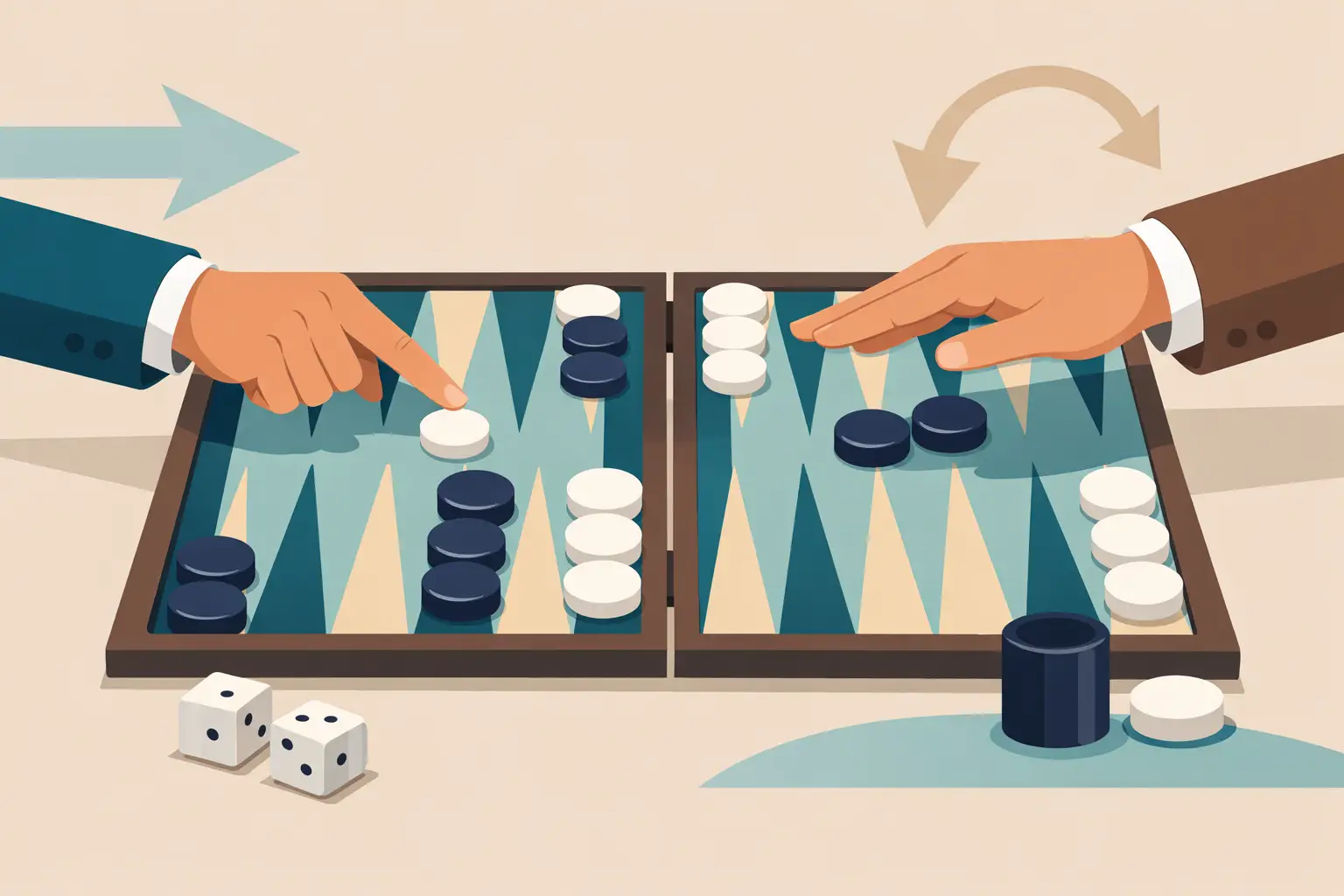
A loose checker is an invitation, not an automatic command. Knowing when to hit in backgammon separates moves that look aggressive from moves that actually win matches. A hit can send an opponent to the bar, wreck their timing, and create a gammon threat. It can also hand them an easy return shot, destroy your own structure, and turn a winning race into a scramble.
The strongest players do not ask only, "Can I hit?" They ask what happens if the opponent dances, what happens if they enter immediately, and whether the position still works when the dice go against them. That is the mindset to bring into every quick match, ranked game, and tournament decision.
What a Hit Really Buys You
When you hit an opposing blot, you gain tempo. Your opponent must enter from the bar before moving any other checker, using a roll that lands on one of your open home-board points. If they cannot enter, they lose their turn completely. That is powerful, especially when your home board has several made points.
But the value of a hit is not fixed. Hitting on your 5-point while you own four home-board points is far more dangerous than hitting on an outer-board point with only one point made at home. In the first case, a missed entry gives you another full roll to improve your board, make a point, or hit again. In the second, your opponent may re-enter safely and attack the blot you left behind.
A useful question is: does this hit create a real follow-up, or merely delay the opponent for one roll? If there is no follow-up and you expose multiple checkers, the flashy play is often the wrong one.
When to Hit in Backgammon: The Best Signals
Your home board is closing
The clearest time to hit is when your board is strong. With four, five, or six points made in your home board, every blot you send back becomes a serious liability. The opponent has fewer entry numbers, and a missed roll can give you time to close the board completely.
This is why builders often hit even when they leave a return shot. If the opponent enters, they may still be trapped behind a powerful prime or face a difficult position. If they fail to enter, the game can end quickly. Your board converts the temporary gain of a hit into lasting pressure.
The opponent has poor timing
An opponent on the bar is most vulnerable when they have few useful checkers to play after entering. Perhaps they have checkers stranded deep in your home board, or their remaining checkers are stacked awkwardly behind a prime. Hitting then does more than send one checker back. It forces their entire position to lose coordination.
Timing matters particularly in holding games. If your opponent is waiting behind your prime with fewer spare pips than you, a hit may make them run out of useful moves first. Conversely, if they have plenty of spare checkers and you are the player running short on timing, hitting can give them the contact they need to win a game that was drifting your way.
You can hit and improve your position
The best attacking moves do two jobs. They hit a blot while making a valuable point, unstacking a heavy point, building a home-board point, or bringing a builder into range. A move that hits loose and leaves your checkers scattered is very different from a move that hits while strengthening your structure.
For example, hitting on an inner-board point while creating a new builder nearby may be better than making a safe but passive play. You have increased immediate pressure and improved your chances on the next roll. That is productive aggression.
The race is close or you are behind
If you are behind in the race, contact is often your route back into the game. A clean race favors the player with fewer pips remaining. By hitting, you may force the leader to re-enter, lose a turn, or leave additional blots while trying to escape.
This does not mean hit every blot when behind. A hit that gives up a better anchor or leaves you with several return shots can be too expensive. Still, when racing safely means losing quietly, taking calculated contact is usually the competitive choice. You need volatility because the current position is not good enough.
You are playing for gammons
Match score and the doubling cube change the value of an attack. If a gammon is especially valuable, hitting aggressively can be correct even when the normal game is uncertain. Sending a checker back while building a prime or closing your board raises the chance that the opponent never gets all their checkers home.
The reverse is also true. If you only need a single point to win the match, or if losing a gammon would be costly, avoid attacks that create unnecessary disaster scenarios. Strong backgammon is not about applying the same rule in every game. It is about choosing the risk that fits the score.
Count the Return Shots Before You Attack
Before you hit, count what the opponent can do next. A return shot is not just any number that can hit your blot. Some return numbers hit and make a useful point. Some hit from far away but leave the opponent exposed. Some allow them to enter from the bar and immediately attack again.
Start with the simple count: how many rolls hit you if the opponent enters or moves freely? Then look at the quality of those hits. Are they hitting your blot in their home board, where you may have trouble re-entering? Are they breaking an important point to do it? Do they have another blot that you could hit after they fail?
Also count your own alternatives. The right comparison is rarely "hit versus do nothing." You may be able to make an anchor, cover a blot, slot a key point, or escape a back checker. A safe play that preserves a deep anchor can be worth more than a loose hit, especially against a strong home board.
Anchors Change the Calculation
An anchor is insurance. It gives you a safe landing point if you are hit, slows the opponent's bear-in, and can provide a later chance to hit as they try to clear their checkers. The stronger and deeper the anchor, the less desperate you need to be.
Do not casually break a valuable anchor just to hit. If you give up your 20-point anchor to send one opposing checker back, ask whether you have traded a durable defensive asset for a short-lived attack. Against a player with a weak board, the hit may be fine. Against a player building a prime, you may have removed the checker that was keeping you in the game.
On the other hand, an advanced anchor can make a hit safer. If you are hit in return, you may already have a secure point from which to re-enter the game. That safety net lets you attack more freely than a player with no anchor and several blots.
Avoid the Automatic Loose Hit
Newer players often hit because it feels like a gain. Experienced opponents are happy to see that pattern. They know a weak hit can strip your board, give them an entry point, or force your checkers into bad distribution.
Be cautious when you are comfortably ahead in the race and have no strong board. In that situation, the opponent wants contact. A loose hit may give them exactly the complication they need. Keeping the position clean can be more effective than trying to punish a single blot.
Likewise, be wary of hitting if it leaves two or three blots against an opponent with a strong home board. You may hit one checker, but if they return the shot, your own checker could remain on the bar while they attack the rest. One aggressive roll can become a sequence of forced, losing turns.
A Fast Decision Process at the Board
Use a short routine before committing to a hit. First, assess your home board: how hard will it be for the opponent to enter? Next, assess theirs: how dangerous is being hit back? Then compare the race, identify anchors and primes, and count the meaningful return shots.
Finally, consider the score and cube. Are you trying to preserve a lead, create a gammon, or manufacture chances from a losing race? The same checker play can be correct in one match situation and reckless in another.
Daily puzzles are a good place to build this habit because they slow the board down. In a live game, the goal is not to calculate every possibility perfectly. It is to recognize the recurring shapes: strong board plus blot, hit; safe race while ahead, often hold; weak position while behind, look for useful contact.
On Online Backgammon, every roll is part of a transparent, competitive record, so the better your decisions become, the more clearly your results reflect your play. Take the hit when it creates pressure you can sustain. Hold when patience protects a position that is already working. That balance is where aggressive backgammon becomes winning backgammon.